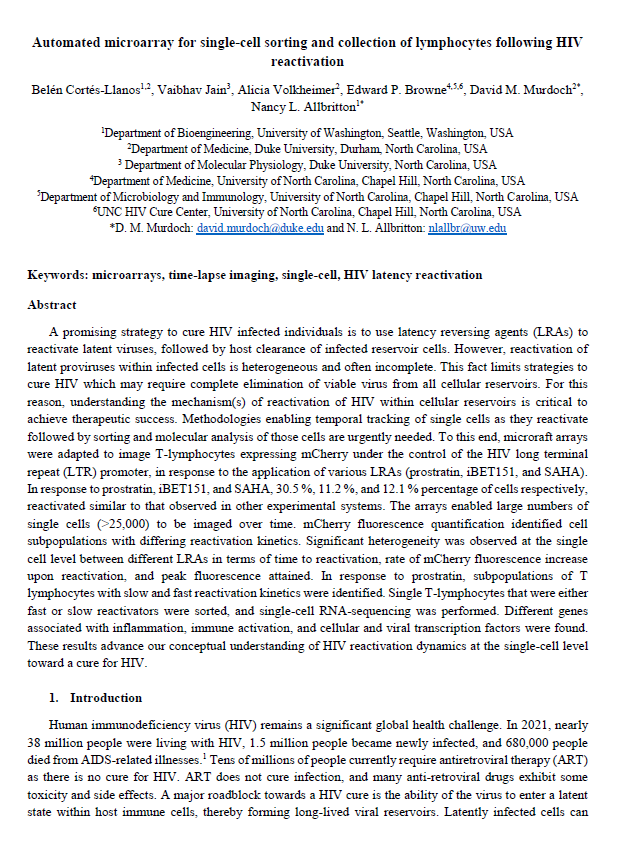
HIV continues to be a challenge around the world however it is constantly studied to potentially unlock a cure. One strategy involves using latency reversing agents to reactivate latent viruses, followed by host clearance of the infected reservoir cells. To have success with this method, understanding the mechanism of reactivation of HIV within cellular reservoirs is necessary. To study the mechanism of reactivation, CellRaft Arrays were used to identify and collect cells based on the kinetics of their HIV LTR-driven mCherry expression in response to latency reversing agents. The arrays enabled a large number of single cells to be imaged over time to look for fluorescence quantification of mCherry. The CellRaft Arrays were able to show significant heterogeneity on the single-cell level that advances the understanding of HIV reactivation dynamics to progress towards a cure for HIV.